


According to the Met Office, the United Kingdom has experienced a significant increase in heavy rainfall the last decade which in turn increases the risk of flooding.
In the UK, flooding typically occurs when heavy rainfall sees the drainage systems overwhelmed, and rivers burst their banks. Some areas of the UK that are more susceptible to flooding are:
Should I Drive Through Floodwater?
It is sensible to avoid driving if you know, or suspect, your route may be flooded. Flooded roads present a risk to you, your passengers and other road users. In addition, your vehicle could be written off if water isn’t navigated properly.
If you must drive or are already on the road and encounter a flood, you should stop, turn back and find an alternative route. If it is not possible to turn back, we’ve assembled a guide on driving through flood water safely.
Risks of Driving Through Floodwater
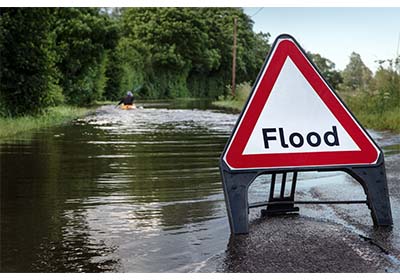
There are many risks associated with driving through flooded areas, for instance:
Risks to people:
Risks to vehicles:
Risks whilst driving:
Can I Drive My 4×4 Through Water?
4×4’s aren’t immune to water damage from flooding. 4×4’s and all-wheel drive vehicles still have a maximum recommended wading depth. This may be slightly higher than a normal car due to increased ground clearance. Many 4x4s that come with factory fitted raised air intakes (snorkels) as standard can still let water in via engine breathers and un-sealed areas such as the air filter housing. Unless your 4×4 has been specially adapted for “wading” you should follow the same advice as for cars.
What to Check Before Driving in Floodwater
If you must drive through a flooded area or road then there are some things you need to consider:
Your Tyres
Check the condition and tread depth of your tyres as this is vital for having control of your steering and braking. The tread depth of your tyres affects your stopping distance since the tyre tread helps move water, mud, and debris away from the tyre’s contact with the road.
A shallow tread depth causes a build-up of water as it can’t be dispersed fast enough which increases the risk of skidding or aquaplaning.
The legal minimum tread depth is 1.6mm but it is recommended to get them replaced when they drop below 3mm
The Depth of Water
Don’t drive through moving water or water that is more than 4 inches deep. If you wouldn’t walk through it, definitely don’t drive through it. The average wading depth is 4 inches, as most car air intakes are around that height.
If water enters the air intake, it will be sucked into engine which can cause a hydrolock – effectively making the engine uneconomical to repair.
How to Safely Drive Through Floodwaters
Reduce Your Speed to 3-4 mph
Driving slowly through a flood prevents water from going over the bonnet of the vehicle. If water goes over the bonnet, it is likely to have already entered the air intake and other sensitive areas. Driving at a reduced speed h forces water away from your vehicle’s air intake and vulnerable areas.
Avoid Changing Gear
Whilst driving through water, don’t change gears. This is to avoid stalling in the middle of the flooded area, but also to reduce the chance of water contaminating your clutch and transmission.
Drive Along the Middle/Highest Part of the Road
Roads tend to be the highest in the middle meaning the water should be shallowest here.
Keep Extra Distance Between Vehicles
When following another car, allow some distance between you in case they get stuck, breakdown or lose control of their vehicle.
Remember, in wet conditions stopping distances and brake effectiveness are both significantly reduced.
Pass Through Flooded Sections One Car at a Time
If cars pass each other coming through a flood, there is a risk that one’s bow wave will go over the bonnet of the other. It is safest to go through one vehicle at a time, giving way to oncoming vehicles first.
Use More Revs Than Usual
When driving through floods, you should increase your engine revs to prevent both water from entering your exhaust and the likelihood of you stalling the engine.
For manual transmissions: slightly let off the clutch while pressing the accelerator to increase the engine speed.
For automatic transmission: select the lowest held gear and keep your foot on the accelerator.
Keep Moving
When driving through floods, you should keep moving until you’re out of the water. Stopping in the middle of water can be dangerous as it allows water to enter the engine or into the vehicle cabin via door seals, putting both you and vehicle at risk.
Test Your Brakes
After driving through the flooded area, you should gently apply your brakes a few times. This will aid in drying your brakes due to friction-generated heat and give you reassurance they’re still working for the rest of your drive.
How to Drive Through Fords and River Crossings
According to the AA, more than half of flood related breakdowns are at fords – points at which the road passes through a river.
Our advice for navigating fords is much the same as for flood water:
When an area is experiencing flooding, fords are best avoided due to the increased risk.
Breakdown Cover
Having breakdown cover in place can means you can have access to assistance if your vehicle develops a mechanical or electrical fault during your journey. However, having a breakdown policy generally won’t cover you if you choose to drive through floodwater, so it’s important to avoid flooded roads and check your policy wording before setting off.

Comments are closed