


Driving is one of the best ways to explore France, from the countryside and charming villages to famous wine routes and cities. With a car, you have the freedom to travel on your own schedule without being tied to public transport timetables.
However, before you get behind the wheel, it’s important you get familiar with French driving laws, road signs, markings and parking regulations. This is a comprehensive guide to everything you need to know ahead of driving in France.
If you’re hiring a car, don’t forget car hire excess insurance. Our policies work by reimbursing the fees you may incur if you return the vehicle with damage. With the right knowledge and protection in place, you will be all set for a smooth and stress-free French driving experience.
The Basics
French Rules of the Road
Traffic Lights in France
Speed Limits
Speed limits in France are variable depending on the road and the weather but generally the following is true.
| Road Type | Speed Limit in Kilometres | Speed Limit in Miles |
| Motorways/Autoroutes | 130 km/h reduced to 110 km/h in rain | 80 mph / 70 mph |
| Dual Carriageways | 110 km/h reduced to 100 km/h in rain | 70 mph |
| Open Roads | 80 km/h although this can vary by region | 50 mph |
| Built-up Areas | 50 km/h otherwise indicated otherwise | 30 mph |
Speed cameras are common, if you get a fine and you’re hiring a car this can be sent to the car hire company.
If you’re caught speeding you will be registered by the French government. If you’re stopped by police, you’ll receive an immediate fine. Additionally, your licence could be confiscated, you could be banned from driving in France or you could even be arrested.
It’s also important to know that radar detectors and GPS alerts that inform you of speed cameras are illegal and could lead to you being fined €135.
French Road Signs
You’ll get a good understanding of what the road sign means just by its shape and colour, and the road signs used in France follow European standards meaning you should recognise some of them. The main categories of signs are as follows.
| Type of Road Sign | Meaning |
| Circular | These are regulatory signs that indicate rules you must follow such as speed limits or restrictions like no overtaking. |
| Square | These are informational signs that provide guidance about the road ahead, whether there is a sharp bend or informing of lane directions. |
| Red and white triangular | These are warning signs alerting you to potential hazards such as children or animals crossing, or slippery roads. |
| Red and yellow triangular | These are temporary warning warning signs that are often used near roadworks, detours or construction zones to signal short term dangers. |
Key Signs You Should Be Aware Of
| Sign | Name | Meaning |
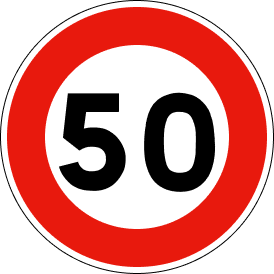 | Speed Limit | Number is km/h. When you see ‘rappel’ it means the speed limit still applies. |
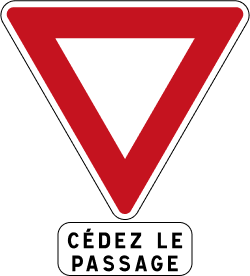 | Yield/Give Way | Give way at junctions |
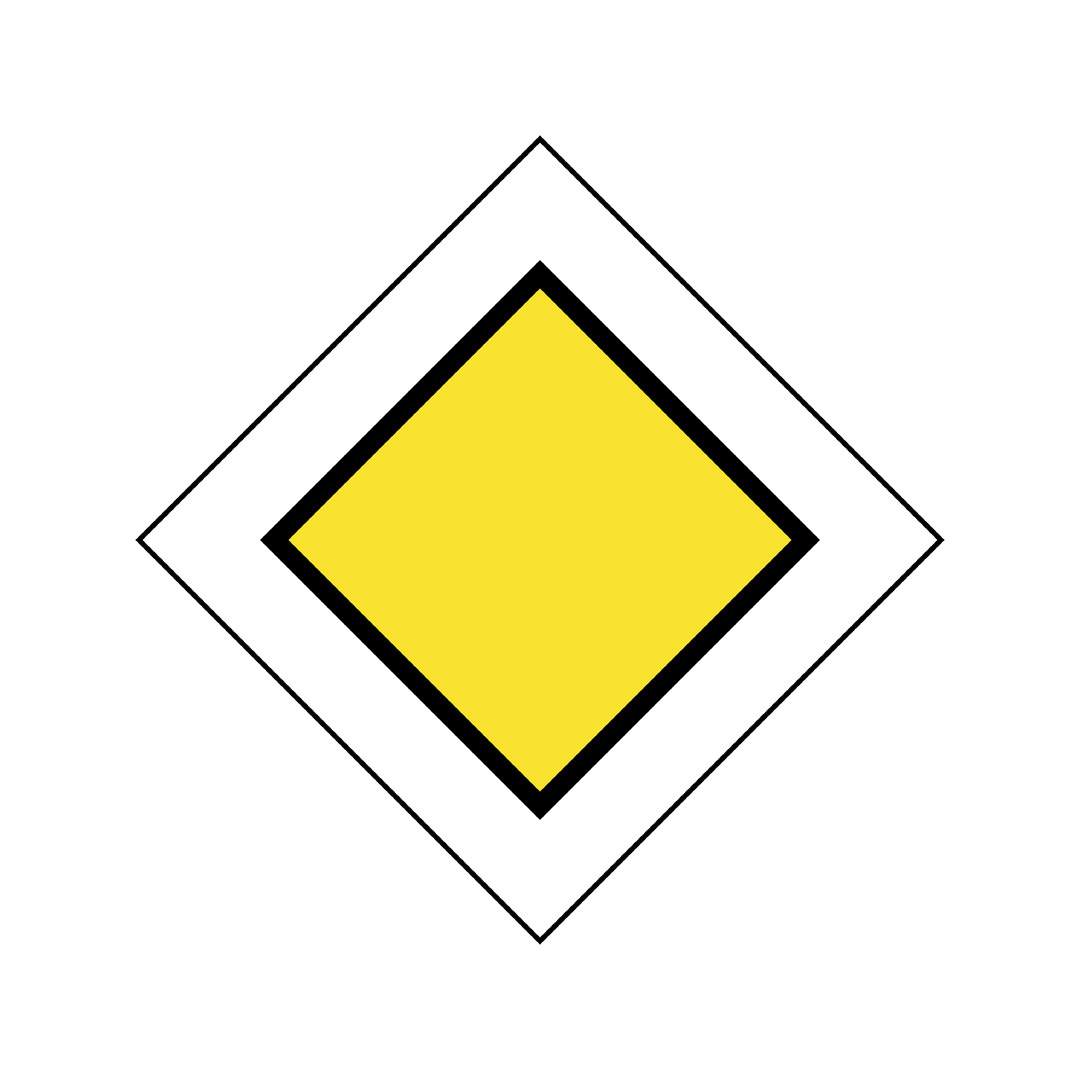 | Priority Road Starts | The yellow diamond signals that you have right of way. |
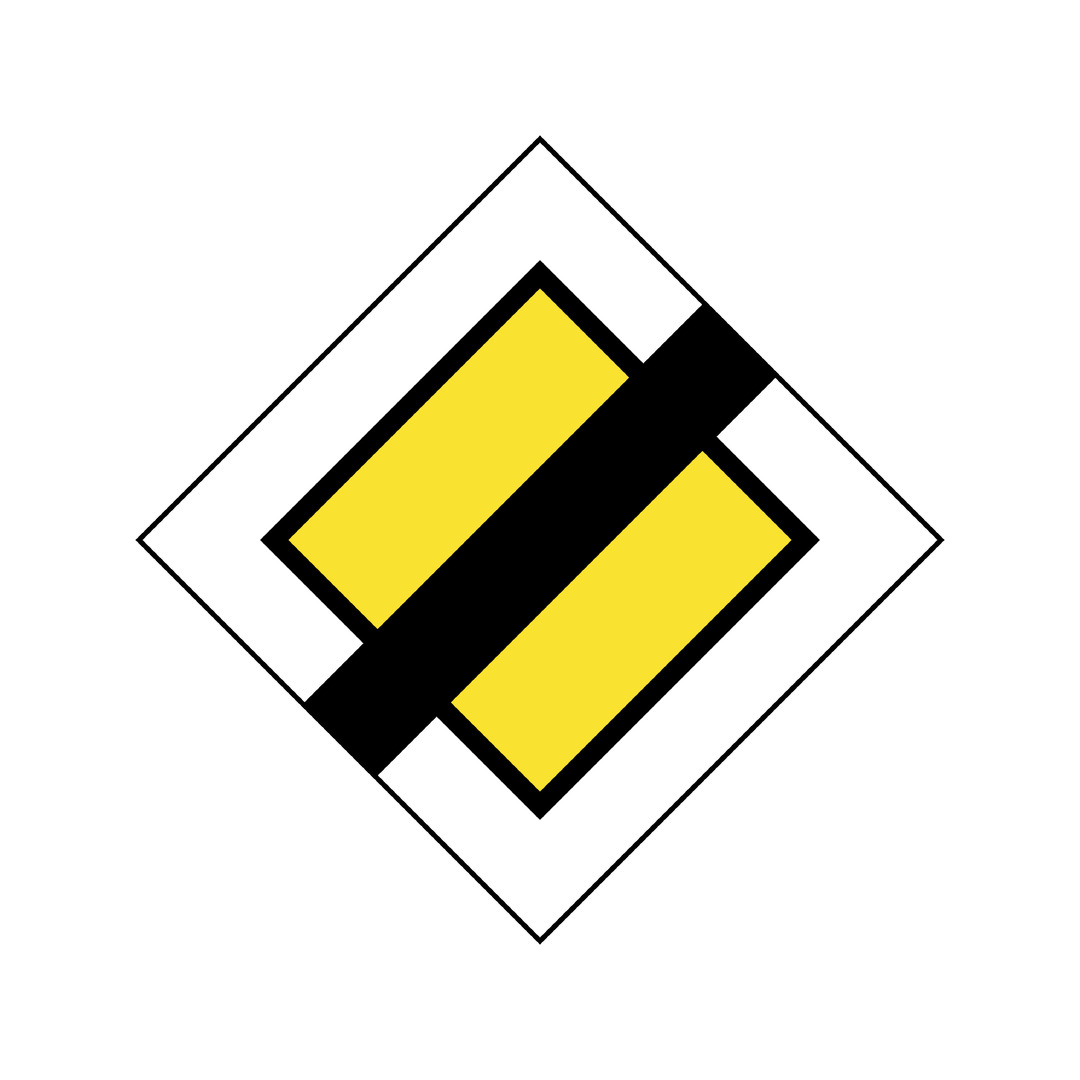 | Priority Road Ends | The black slash indicates it’s no longer your right of way. |
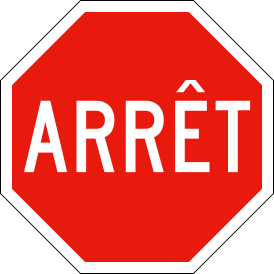 | Stop | Full stop is required. You could get fined €135 if you don’t. |
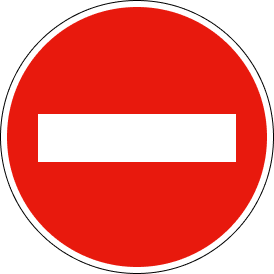 | No Entry | A red circle with a horizontal white line means you cannot enter. |
Tolls
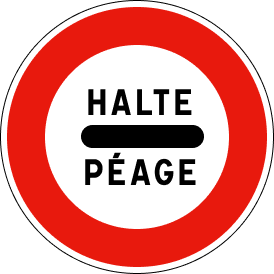
France has many toll roads, péages, with French motorways, ‘autoroutes’, mostly all being toll roads. To pay you can use cash, card or
Fuel
To fill up your car with diesel, you will need to identify the pump that is marked with ‘gazole’.
Higher-octane petrol can be found under ‘sans plomb 95’ and standard-octane petrol under ‘sans plomb 98’.
Petrol prices can vary throughout time and parts of the country, so it is always worth checking the current fuel prices before travelling.
You’ll be able to find petrol stations on main routes. They might be closed in rural areas, especially on Sundays. Unmanned stations will often require you to use a chip-and-PIN card.
Parking Rules in France
Parking in cities can be daunting and tricky, especially if you don’t know what different colours and markings mean. Parking illegally can lead to fines as well as your car being clamped, towed or impounded so it’s always good to get familiar with how parking works in France.
| Parking Zone | Meaning |
| Blue zones (zone bleue) | To park in a blue zone you will need a parking disc (disque de stationnement) that shows your arrival time. |
| Pay-and-display zones | You’ll need to use a parking meter and display the ticket on your dashboard. |
| Continuous yellow lines | If yellow lines are continuous this signifies that stopping and parking in this area is prohibited. |
| Broken yellow lines | Broken yellow lines indicate that you must not park. |
| White lines | These usually indicate permitted parking. |
| Parking Zone | Meaning |
|---|---|
| Blue Zones (Zone Bleue) | To park in a blue zone you will need a parking disc (disque de stationnement) that shows your arrival time. |
| Pay-and-Display Zones | You’ll need to use a parking meter and display the ticket on your dashboard. |
| Continuous Yellow Lines | If yellow lines are continuous this signifies that stopping and parking in this area is prohibited. |
| Broken Yellow Lines | Broken yellow lines indicate that you must not park. |
| White Lines | These usually indicate permitted parking. |
As always, check local signs for confirmation of the above.
Additionally, it’s important to know that if a road has two side-by-side lanes, you must only park on the right-hand side and you must face the same direction as the flow of traffic.
French Child Safety Rules
Children under 10 years old cannot travel in the front seat unless there are no rear seats.
Children must use approved car seats/boosters based on weight:
| Child’s Weight | Seat Type |
| < 10 kg | Rear-facing seat/carry cot |
| < 13 kg | Rear-facing seat |
| 9 – 18 kg | Child seat with 5-point harness/tray |
| 15 – 25 kg | Booster seat with adult belt |
| 22 – 36 kg | Booster seat with adult belt |
If your children are not in the correct seat you may face a fine.
Additional Safety Rules to Remember
Driving in France FAQs
If you hold a driving licence from the UK, EU, or EEA, you do not need an IDP to drive in France. Drivers from other countries may require one, so check before you travel.
Always keep the following in your vehicle, bear in mind the specifics will depend on if you own the car or are hiring it:
• Driving licence – must be full and valid
• Passport and any other ID card
• Insurance documents
• Car hire agreement
• Vehicle registration (V5)
• Crit’Air clean air sticker if planning to enter restricted zones
You are required to carry the following items to comply with French law:
• Reflective jackets – one per passenger and stored in the cabin
• Warning triangle
• Headlamp beam deflectors
• Winter tyres/snow chains – these are only mandatory Nov–Mar in mountain regions
Additional optional but useful items include a first aid kit, spare bulbs, torch, spare tyre, jump leads, snacks, water and phone chargers.
It used to be mandatory to carry a breathalyser in your vehicle in France but this is no longer the case.
Final Thoughts
With a bit of extra research and forward planning, you’ll be well-equipped to handle any driving situation in France, whether it’s navigating road signs to understanding parking zones. Staying prepared means you can avoid fines, reduce stress and simply enjoy your journey.
Don’t forget, if you’re hiring a car, car hire excess insurance offers valuable protection against unexpected costs from accidental damage.

Comments are closed